What community policing means, and how Iowa measures it
Picture a Scott County resident who just left a neighborhood watch meeting, pulling up the county jail's online inmate listing on their phone to see whether the address that keeps generating repeat 911 calls shows any bookings this month. They're wondering whether the community policing program down the street is actually changing that pattern or just generating good press. That resident is asking the right question. They're asking for evidence, not stories.
Community policing is a strategy with three core pillars, according to the Department of Justice's COPS Office: building community partnerships, transforming how the police organization operates, and solving problems at their source rather than just responding to incidents. Results Iowa's Safety cluster doesn't track programs based on department press releases or testimonials. Instead, we tie community policing efforts to Iowa Department of Public Safety annual reports and county-level crime data that citizens and stakeholders can verify themselves.

The specific indicators we measure include officer-to-resident engagement events per month, foot and bike patrol hours dedicated to fixed geographic beats, and citizen complaint trends over time. A program must report measurable outcomes, not just attendance or participation counts, to count as a tracked result in our system. That's the difference between knowing how many people showed up to a Citizens Police Academy and knowing whether foot patrol officers built relationships that led to a reduction in repeat calls from a specific neighborhood block.
As we explain in our guide to Iowa violent crime rates and statistics, county-level trends become your baseline for comparing what a community policing program claims to accomplish against what the numbers actually show.
How does community policing reduce crime?
The mechanism works through relationship continuity. Officers assigned to the same geographic beat for months or years build trust with residents and become visible enough that community members recognize them as individuals, not just uniforms passing through. This is not theoretical. When an officer responds to a 911 call at the same address for the third time in a month, they have a chance to ask what the actual problem is rather than just documenting another incident.
Problem-oriented policing goes further. It addresses root conditions like vacant lots, poor street lighting, and addresses that generate repeat calls. Instead of only reacting to individual incidents, officers and residents work together to identify what draws criminal activity to that location and change it. A coordinated neighborhood watch program that documents repeat offense patterns at a specific address, paired with foot patrol presence during high-risk hours, can reduce 911 call volume at that address over a six-month or twelve-month period. That's measurable. That's what Results Iowa tracks.
The accountability tradeoff you should ask about is this: a community policing strategy needs a before-and-after data point to claim impact. Describing the program is not evidence that it works. Research shows that police-community partnership strategies paired with sustained resident engagement are associated with measurable reductions in community violence, but the keyword is "associated." That means a program must show data from your specific county, your specific neighborhood, over your specific time period.
What community programs does Iowa City PD offer?
Iowa City Police Department operates several distinct community policing programs. A community outreach unit handles directed engagement events. Bike patrol assignments place officers on bicycles in high-foot-traffic neighborhoods during evening and weekend hours. The Citizens Police Academy is a multi-week training series where community members learn about department operations, use-of-force policy, and ride along with officers. These are separate programs with separate metrics.
School resource officer placements and youth engagement programming are tracked as a distinct category because they operate in a different venue and serve a different population. When Results Iowa reports on a county's community policing performance, we would break down participation and outcome data for each of these separately rather than rolling them into one combined "community policing" number. That separation matters because an effective Citizens Police Academy that builds trust among civically engaged residents doesn't tell you anything about whether your SRO program is meeting school safety goals.

You can verify the effectiveness of these programs against broader public safety trends by reviewing DUI enforcement effectiveness in Iowa to see how different enforcement and engagement strategies perform at the county level.
Has community policing been successful in Iowa?
Success is measured against explicit, published performance indicators, not testimonials or media coverage. The comparison point is county-level crime-trend data, which you can access through Results Iowa's Safety cluster for your own county. A program claiming success needs to show that a defined indicator moved in the intended direction over multiple years, with the data published where residents can verify it.
"Peer-reviewed research links community policing strategies to reduced fear of crime and improved resident perceptions of police legitimacy."
Here's the transparent part: not every Iowa county submits participation and outcome data in the same format, which limits statewide apples-to-apples comparison. Some departments report foot patrol hours. Others report engagement events. A few report citizen complaint trends. That reporting gap is itself a data point. If a county's police department is not publishing measurable outcomes for its community policing programs, citizens have a legitimate question about whether the program is being held accountable at all.
Using public records to verify what community policing changes
You don't need to take anyone's word for it. The Scott County Jail maintains an online inmate listing that shows current bookings. A resident can check that listing against a police department's claim that a community policing initiative reduced repeat offenses at a specific address. If the department claims that foot patrol and neighborhood watch activity lowered repeat bookings from that address, the jail listing lets you verify that claim over a defined period.
Iowa Courts Online is the statewide case-search portal where you can look up case status for specific addresses or individuals. If a community policing program includes a diversion or referral component, Iowa Courts Online shows whether those cases resolved as reported. These tools work best when used in parallel with Results Iowa's Safety indicators rather than as a substitute for them:
- Scott County Jail online inmate listing: Shows current bookings by address, useful for verifying repeat-offense claims
- Iowa Courts Online: Displays case status and resolution for specific addresses or individuals
- Results Iowa Safety cluster: Provides county-level aggregate crime trends and community policing participation data
- County police department public reports: Local-level community policing outcome data if published
- Neighborhood watch meeting minutes: Document-specific addresses flagged for repeat calls over time
The decision rule is straightforward: individual-case lookups show you specific bookings or case outcomes, not program-level results. Use them as a complement to Results Iowa's aggregate data, not a replacement. A practical example: a resident cross-checks a county's reported drop in repeat calls against actual booking activity for the same address over the same period. If repeat bookings from that address dropped from twelve per year to four per year in the same year the foot patrol program launched, that's evidence. If the bookings stayed flat, that's a question the program needs to answer.
To understand how these verification tools fit into Iowa's broader justice system, review our data on Iowa prison population and incarceration trends to see how different policy interventions affect outcomes across the state.
Community aid partnerships that extend policing results
Community policing doesn't work in isolation. United Way of the Quad Cities Area coordinates community service volunteers alongside local policing initiatives, including food pantry support and resource referrals for residents. Shoreview Community Center serves as a neighborhood hub used for joint police-community events and outreach meetings. These partnerships extend the reach of policing strategies into food security and housing navigation, addressing root drivers of crime.
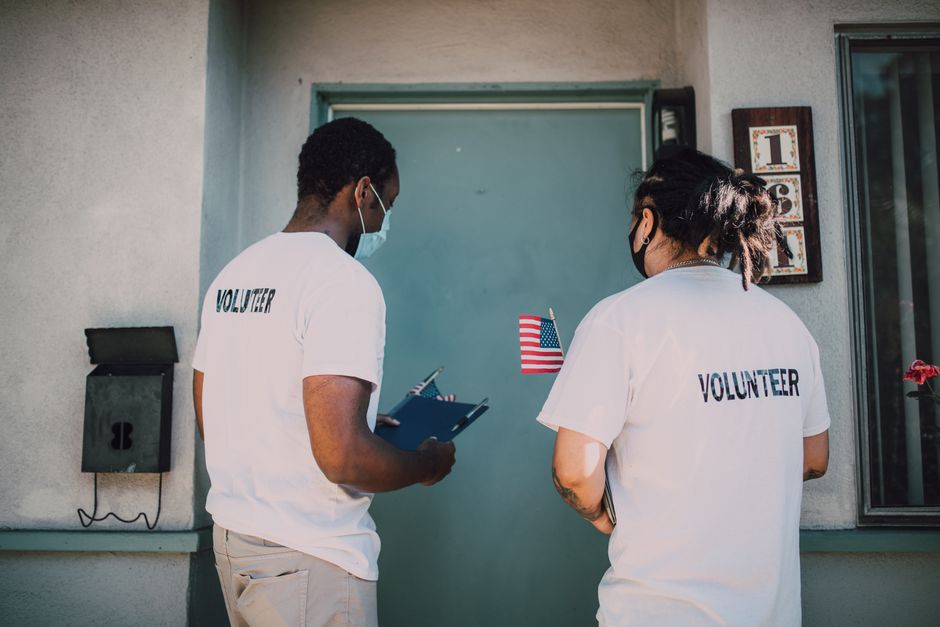
The metric that matters is the number of joint outreach events per year and resident survey scores on trust and resource access, not simply volunteer headcount. Research supported by NIH funding demonstrates that resident-organization partnerships are linked to lower rates of violent crime when measured at the neighborhood collective-efficacy level. Set this expectation for your own community: these partnerships support community policing goals, but they should be reported separately. A food-aid event is not the same performance category as a foot-patrol program, and conflating them obscures which strategy is actually driving results.
What are some examples of successful community policing initiatives?
Several Iowa municipalities have adopted versions of core community policing models. Each should carry its own reported indicator rather than a single blended success claim. Here are the main initiative types and what distinguishes them:
- Fixed-beat foot and bike patrols: Officers assigned to the same geographic area for months or years, building resident relationships and presence
- Citizens Police Academies: Multi-week training series for community members covering operations, policy, and ride-alongs
- Coordinated neighborhood watch programs: Resident groups working with officers to document patterns and address root conditions at specific addresses
- School resource officer placements: Armed officers assigned to school buildings for safety and youth engagement
- Co-responder mental-health units: Officers paired with mental-health professionals responding to behavioral-health calls
The decision rule for calling an initiative "successful" is straightforward: a defined indicator moved in the intended direction over a stated multi-year period, with the data published where citizens can verify it. Not every county reports the same indicators, so comparison requires some translation. Point yourself to Results Iowa's property crime statistics by Iowa county as the comparison dataset for evaluating any specific initiative's claimed impact against actual county trends.
"Community-based prevention strategies are most effective when residents are engaged as partners in the intervention rather than treated as subjects of it."
Where to check Iowa's community policing results for yourself
Results Iowa's Safety cluster dashboard provides county-level updates on an ongoing basis rather than a one-time snapshot. Attend your local police-community meetings and cross-reference what is reported there against Iowa Courts Online and county jail listings to verify individual claims. If you're a policymaker or stakeholder, apply the quantifiable-objectives standard when evaluating any new community policing proposal before funding it. Ask for the specific indicators that will be tracked, the baseline data showing the starting point, and the published timeline for reporting results.
The resident who walked away from that neighborhood watch meeting with a phone full of public records isn't being cynical. They're being accountable. That's the same standard Results Iowa applies to every program across the Safety cluster. Measurable indicators replace guesswork. Transparent reporting replaces faith. You can verify what your community's policing strategies are actually achieving by visiting Results Iowa's transparency dashboard and taking the time to read the data your state government collects. That's how accountability works.